
Buildings and construction account for 37% of global CO₂ emissions, and half of the buildings that will exist in 2050 have yet to be built or renovated, making the construction decisions of the next decade critical to avoid locking in high-emitting buildings. Yet cumulative investment in building energy efficiency over 2015–2024 fell USD 1.3 trillion below what was needed, and reaching the 2050 targets now requires an additional USD 3.6 trillion by 2030 according to the latest GlobalABC/UNEP Global Status Report. Carbon markets, and specifically the Paris Agreement Crediting Mechanism (PACM), represent a unique opportunity for to mobilise the finance that public national budgets alone cannot provide.
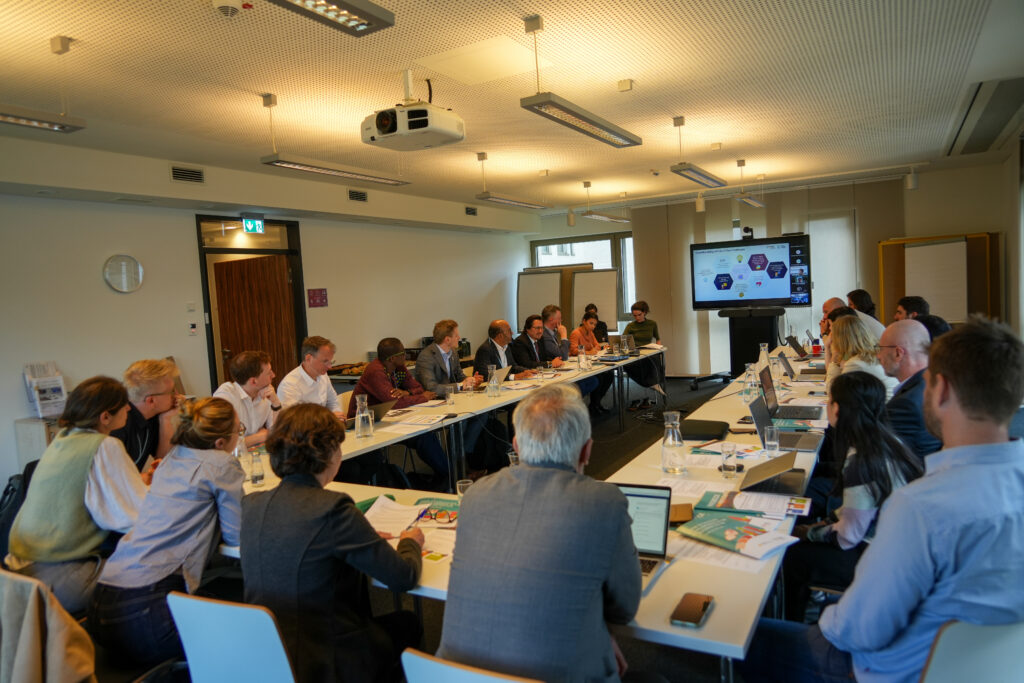
It was against this backdrop that the Partnership for Energy Efficiency in Buildings (PEEB) organised a policymaker exchange during the GIZ Carbon Week at the margins of the UN Climate Change Conference (SB64) in Bonn, Germany, on 9 June 2026 to examine what it concretely takes to make carbon markets work for buildings.
The PACM under Article 6 of the Paris Agreement offers a mechanism to help close the finance gap by enabling developing countries to generate internationally transferable mitigation outcomes (ITMOs) from buildings projects that can be then sold to other countries or companies to access carbon finance. The PEEB meeting in Bonn examined what it takes to make this work in practice: the methodologies, the baseline frameworks, the data infrastructure, and the institutional architecture that must be in place before carbon finance can flow to buildings.
Frank Wolke (BMUKN) opened the discussion by framing buildings as central to any credible mitigation strategy, while identifying the structural barriers that currently prevent carbon markets from playing that role: fragmented small-scale contributions, high MRV costs relative to project size, incomplete regulatory frameworks, and scarce reliable data. He pointed to PEEB’s newly launched step-by-step guide on GHG emissions baselines as a concrete response to one of the most fundamental gaps, and signalled COP31 in Antalya, Türkiye, as the next milestone for translating SB64 discussions into commitments. Wolke reinforced that carbon markets require trust built on credit integrity, robust corresponding adjustment mechanisms, and regulation that makes decarbonisation financially meaningful for both building owners and occupants.
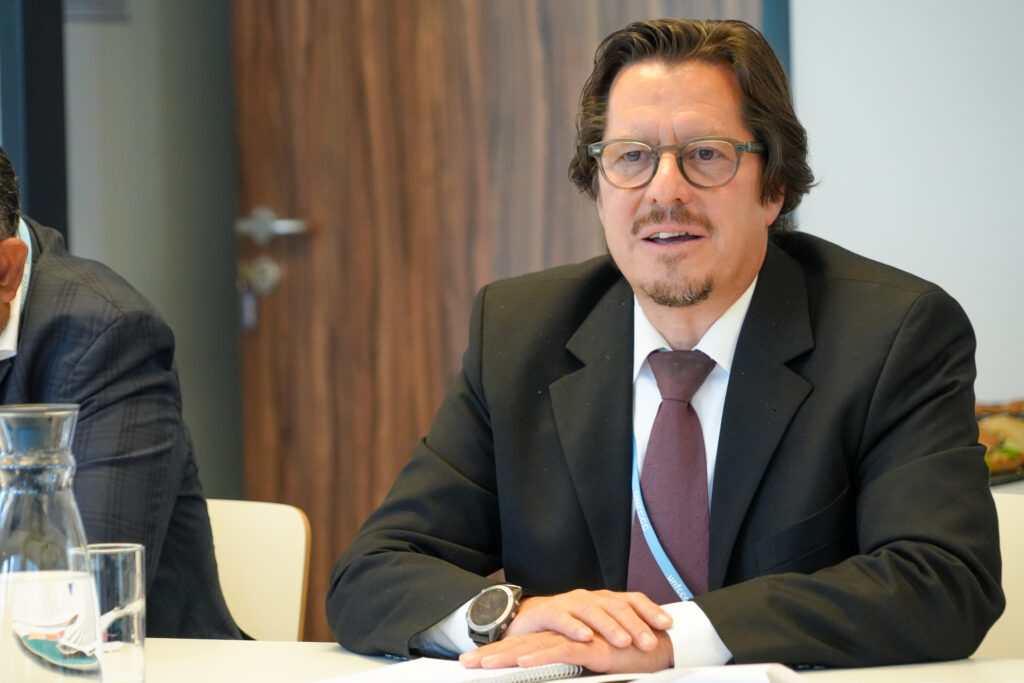
Expert presentations: from the Paris process to data integrity
Kishor Rajhansa (Global Carbon Council) framed the buildings sector’s position within the Paris Agreement’s carbon market architecture, covering both Article 6.2 cooperative approaches and the Article 6.4 crediting mechanism. He highlighted that existing methodologies are not the primary bottleneck and that what is missing is a functioning Carbon Market Infrastructure (CMI) at the national level: the digital registries, authorisation procedures, and typology-based benchmarking systems that allow buildings projects to generate credible, tradeable carbon units. He proposed domestic carbon markets as a viable entry point, where buildings are categorised by performance, with lower-performing stock purchasing credits from better-performing buildings, creating intra-sector demand and a regulatory incentive for improvement.
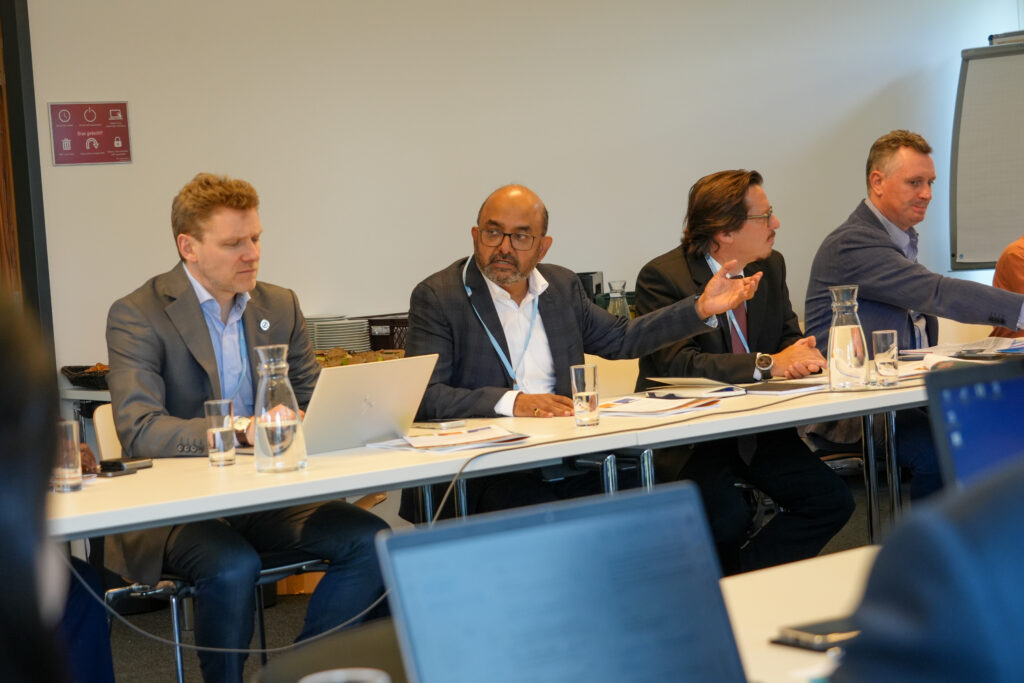
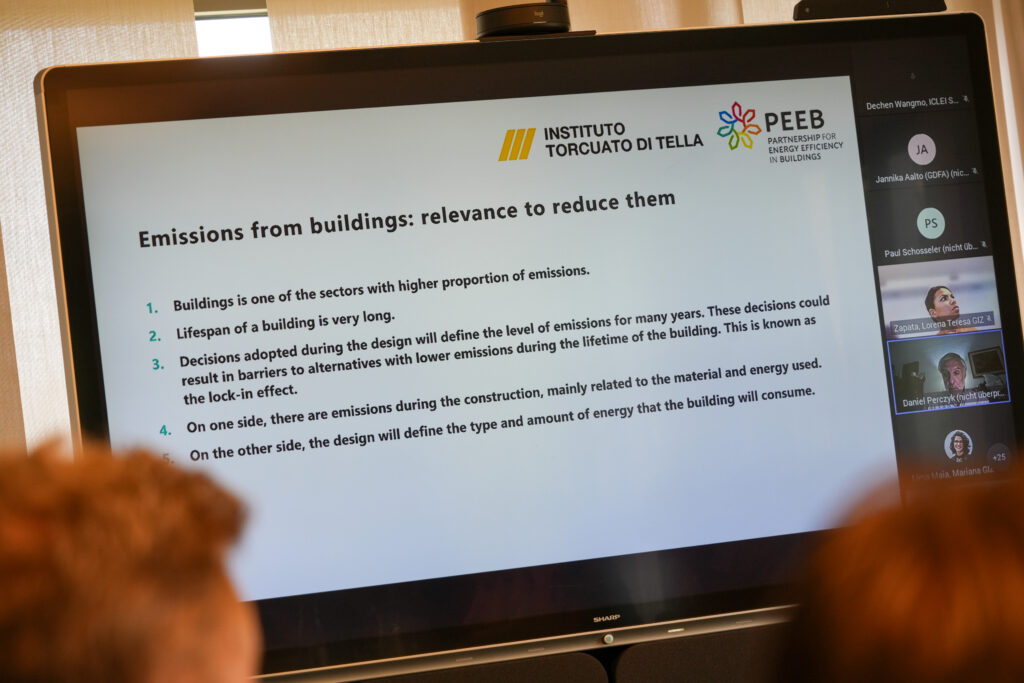
Daniel Perczyck (Institute Torcuato di Tella; author of the PEEB Step-by-step Guide) addressed the data dimension, emphasising that buildings emit across two distinct phases: construction (through materials such as cement and steel) and operation, and that methodologies must account for both if baselines are to be credible. He underlined the need for government-led, robust national databases that allow comparable, disaggregated data on energy consumption by fuel type and on materials-related emissions. Without this, building-level baselines lack the reliability required for integrity in Article 6 transactions. He noted that Article 6.2 allows countries to define their own methodological approach, which creates flexibility but also places the responsibility for rigour squarely on national governments.
Karen Olsen (UNEP Copenhagen Climate Centre) presented the Article 6 pipeline her team has been tracking over 315 registered activities and 106 additional ones in development, and mapped where buildings-related activities currently sit within it. She flagged the risk of carrying over CDM-era methodological weaknesses, citing evidence of significant emissions overestimation in some transitioned methodologies, and called for bottom-up methodology development with strong additionality and baseline integrity requirements.

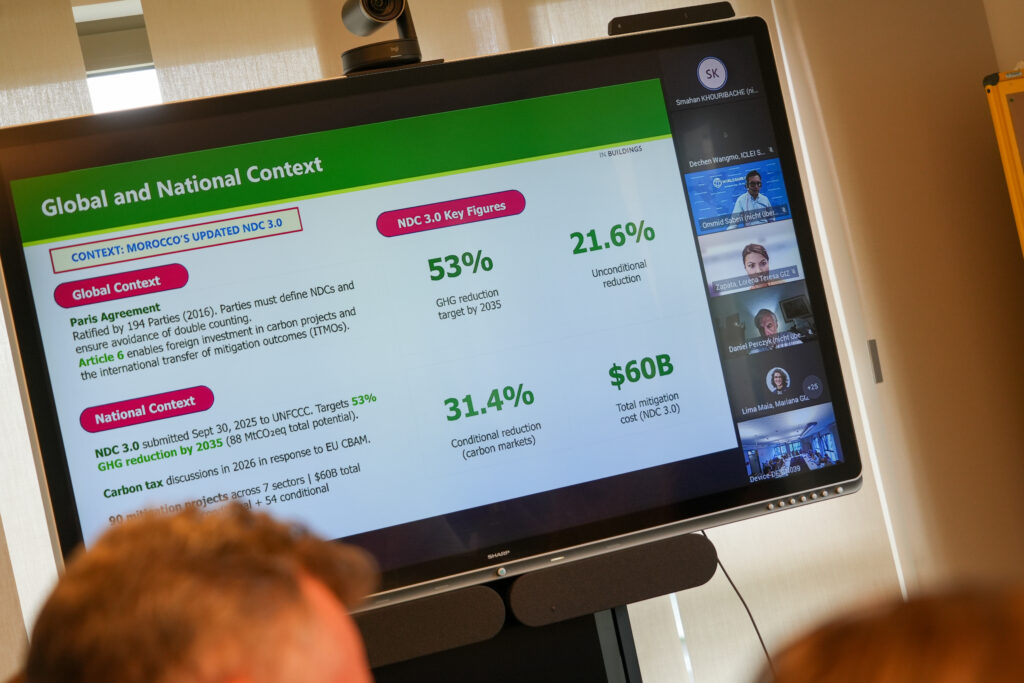
Smahan Khouribache (Ministry of Energy Transition and Sustainable Development, Morocco) presented Morocco’s national framework for Article 6 implementation. Morocco has established a dedicated Carbon Office to examine project submissions and assist proponents, developed two guiding documents for project authorisation, and signed bilateral agreements under Article 6.2 with Switzerland, Norway and Singapore. Seven mitigation projects are currently in the pipeline, with one solar project already under authorisation.
Roundtable: data, scale and market access
The two moderated roundtable discussions brought in a broader set of voices. On accelerating buildings’ access to carbon markets, Ommid Saberi (IFC) pointed to the missed opportunity represented by large public building retrofit programmes that have never tapped carbon finance and highlighted the potential of revolving fund structures that blend donor capital with carbon revenues.
Ayan Harare (Somalia) presented the situation of an early-stage country: an NDC that prioritises resilient infrastructure and carbon market mechanisms, a designated national authority for carbon markets established, but significant capacity gaps in buildings data and policy that currently constrain investor confidence.
On data generation and reporting, Janika Aalto (Green Digital Finance Alliance) presented pilots for continuous digital MRV at the building level, identifying pre-project baseline modelling and data access from building owners as the two most persistent practical obstacles.
Zaki Mohammed (GORD, Qatar) shared Qatar’s approach: a digital simulation tool combined with on-site measurement, producing a granular benchmark database by building typology (residential, commercial, hospitals) that can serve as a national baseline.
York Ostermeyer (Green Digital Finance Alliance) said that the building sector lacks data that is collected under the same parameters so that we have a robust corpus of information that is comparable and reliable across different buildings and different countries. He cautioned against over-reliance on AI for data verification at this stage, while acknowledging its potential for quality control as datasets mature. Paula Baptista (DENA) raised the implementation gap: fragmentation between the supply of green finance instruments and the demand from building users who do not yet understand the financial case for efficiency, a communication and policy design challenge as much as a technical one.
Launch of PEEB’s Step-by-Step Guide on GHG Emissions Baselines
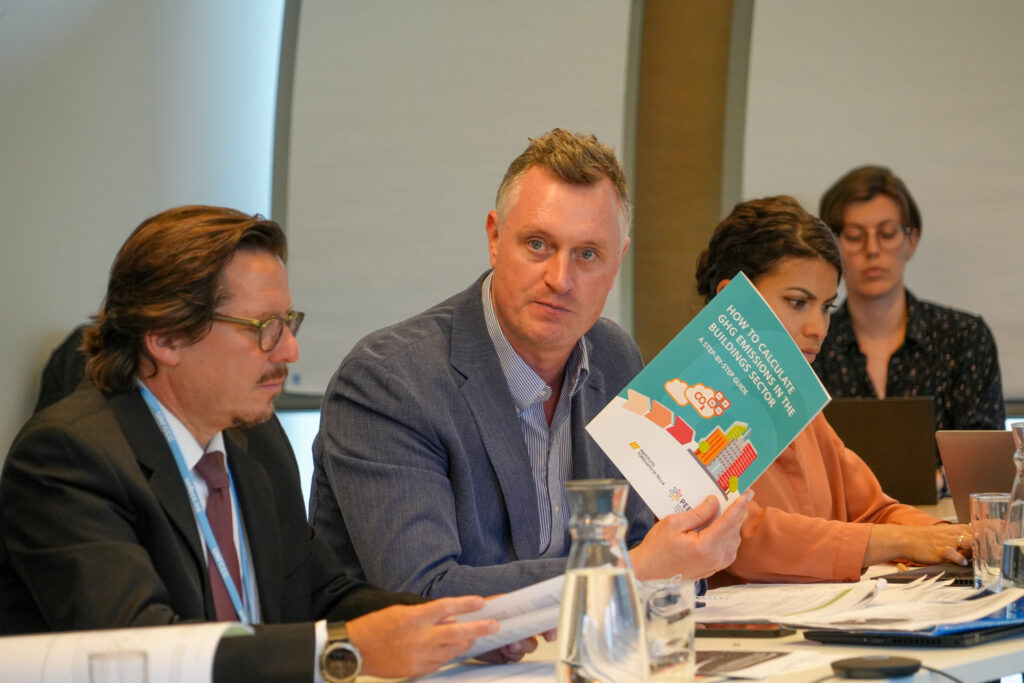
At the event, PEEB launched its new working paper, How to Calculate Emissions in the Buildings Sector — a Step-by-Step Guide. The guide provides structured, practical methodology for public and private sector professionals developing GHG emission baselines for buildings, covering operational and embodied emissions, disaggregation at the building and project level, data analysis, and stakeholder engagement. It is the third publication in PEEB’s Article 6 series, following the White Paper on Methodologies and the Handbook for the Development of Article 6 Projects, and will be updated with case studies from PEEB partner countries as their own baseline development processes advance.
What comes next
The roundtable showed the potential and the need for the methodological and institutional conditions for Article 6 in buildings to be put in place. In his closing remarks, Joscha Rosenbusch (PEEB) invited participants to engage with the GlobalABC Finance Hub, a thematic working group co-chaired by PEEB and IFC that unites 74 member institutions from the public, private, civil society and development finance sectors around the goal of closing the finance gap for zero-carbon, energy-efficient and resilient buildings, and whose current priorities explicitly include promoting Article 6 finance for buildings.
Policymakers, building sector professionals and finance specialists with an interest in learning more on how to use Article 6 to mobilise finance for buildings are encouraged to explore PEEB’s growing body of work on Article 6 for buildings, connect with the Finance Hub, and contact info@peeb.build to discuss how to get involved.