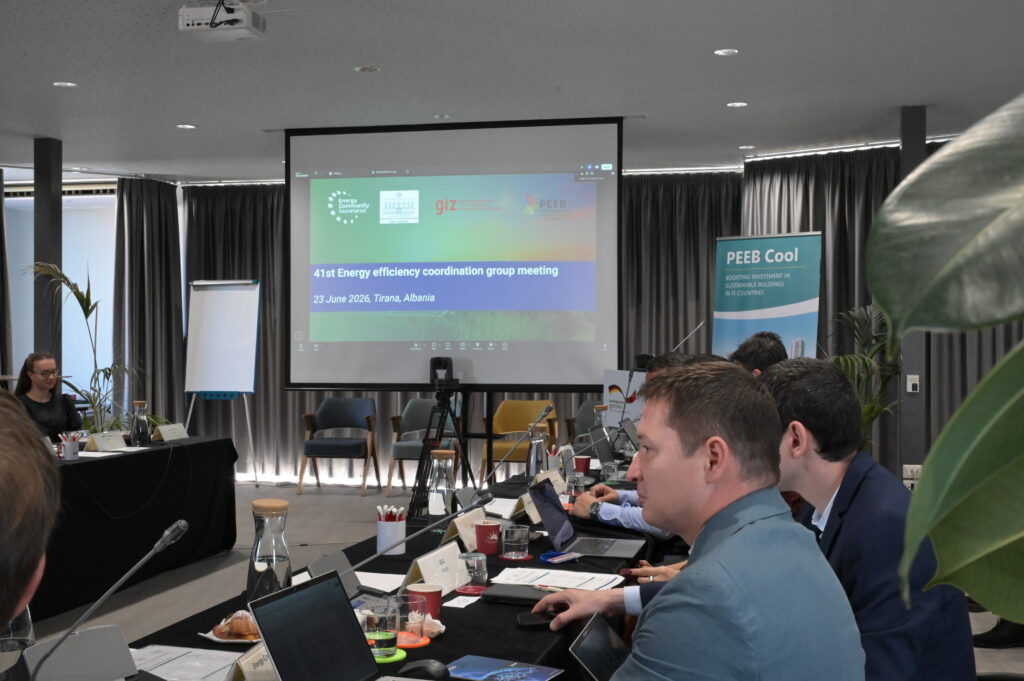
On June 23 and 24, 2026, Albania hosted the 41st Meeting of the Energy Community’s Energy Efficiency Coordination Group (EECG) with the support of GIZ Albania and the Partnership for Energy Efficiency in Buildings (PEEB). In the meeting, Albania demonstrated prioritising energy efficiency in buildings in the implementation of the European Union (EU) can improve citizen health and well-being while contributing to EU climate goals.
The Albanian Ministry of Infrastructure and Energy and PEEB teams shared their experience in developing an Energy Efficiency Building Code and investment frameworks for hospital renovations, showing how these initiatives contributed to increasing the country’s ambition in terms of building decarbonisation and generating institutional know-how for the adoption of ambitious energy efficiency standards.
Improved capacity to plan, finance, and implement energy efficiency measures in buildings will contribute to Albania’s ambitious targets for new construction and renovation: 2% of the building stock renovated per year, corresponding to the renovation of 583.000 buildings with deep or zero-emission standards and resulting in 83% of reductions in GHG emissions, creation of 30.000 jobs, and 10-15% increases in property values.
Thanks to cooperation with PEEB, Albania is currently negotiating a EUR 25 million loan to renovate the country’s hospitals as the first step to achieve the 2% renovation goal. Throughout the meeting, high-level Albanian representatives as well as PEEB experts shared how they managed to make Albania the first country to move from adoption of the EU Law to implementation, what is different in PEEB’s technical assistance, and how it helps to achieve impact. North Macedonia also shared its experiences in leveraging data to plan investments not only for hospitals, but for its entire buildings sector.
Turning the Energy Community’s Energy Efficiency First Principle into Action
The EECG meets generally three times a year to assess progress from the 9 Energy Community countries in implementing the Energy Community’s legal framework. The Energy Community is an international organisation that facilitates the implementation of the EU Energy Law in 9 countries of the European Neighbourhood, thus contributing to their entry in the EU. The EECG is a regional coordination platform that supports the Energy Efficiency aspect of the Community’s mission.
The Energy Efficiency First Principle is a touchstone for the Community Treaty as well as for EU legislation. The meeting highlighted the crucial importance coordination and cooperation in moving from principle to action and Albania showed what this looks like in the buildings sector: moving from strategic planning to concrete deliverables by incorporating energy efficiency in all regulatory levels and creating a robust foundation of energy and data. Together, those conditions enable the development of bankable building energy efficiency investments with credible returns–and, as a result, access to finance.
Energy Efficiency in Buildings to Improve Lives, Businesses, and Public Services
The meeting opened on June 23 with a high-level roundtable gathering representatives of the Albanian Governments, the EU, and Germany as key cooperation partner for Albania and for the Energy Community. The speakers agreed: energy efficiency is an essential element of the energy transition, with buildings in particular offering the opportunity to improve quality of life, productivity, and public services while protecting consumers from external shocks in energy supply and costs.
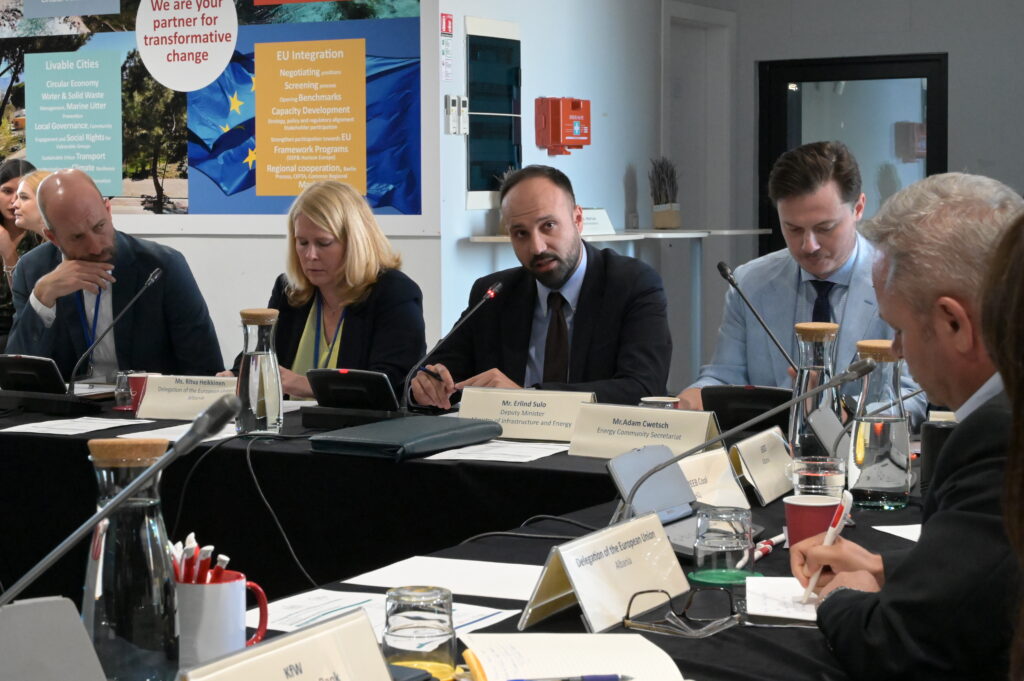
Mr. Erlind Sulo, Deputy Minister of Energy and Infrastructure of Albania, opened the high-level session with a powerful message: no country can achieve energy efficiency alone. She mentioned Albania’s new legislative and regulatory frameworks, regulations, and programmes targeting energy efficiency, especially buildings, many developed with GIZ as a partner.
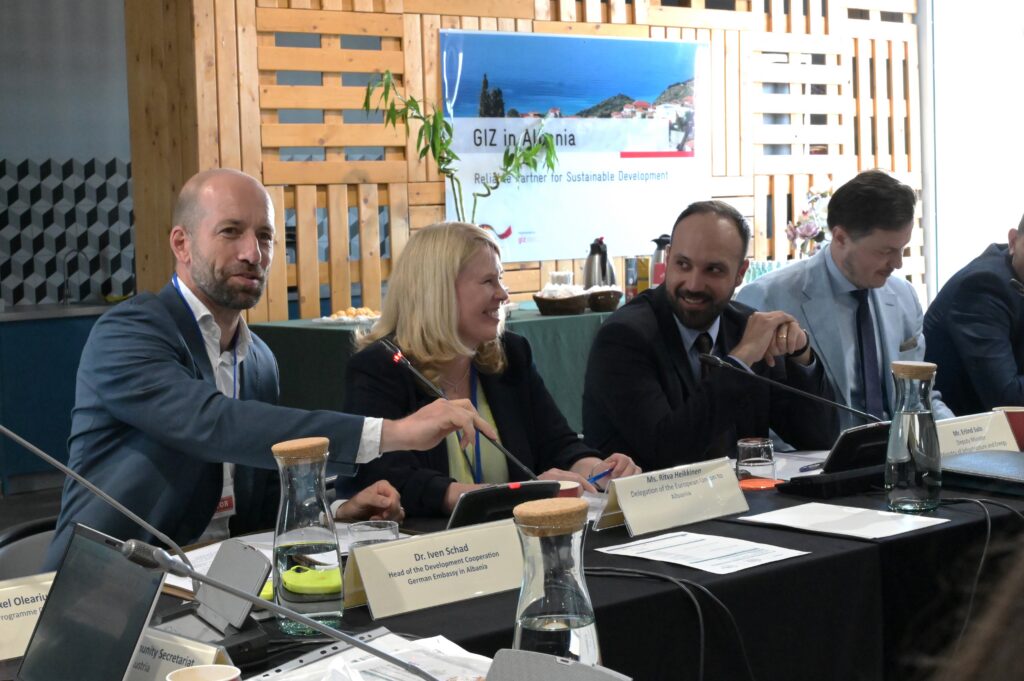
Dr. Iven Schad, representing the German Embassy in Albania, reinforced the German commitment to promoting the Energy Efficiency first principle through German cooperation, citing PEEB as a key initiative in the sector and the need to continue work on the big challenges that remain in achieving true energy performance.
Ms. Ritva Heikkinen (Delegation of the European Union to Albania) put energy efficiency measures in a broader context of Albania’s broader reform agenda to align energy legislation with EU standard, which includes market integration, renewables and infrastructure besides energy efficiency.
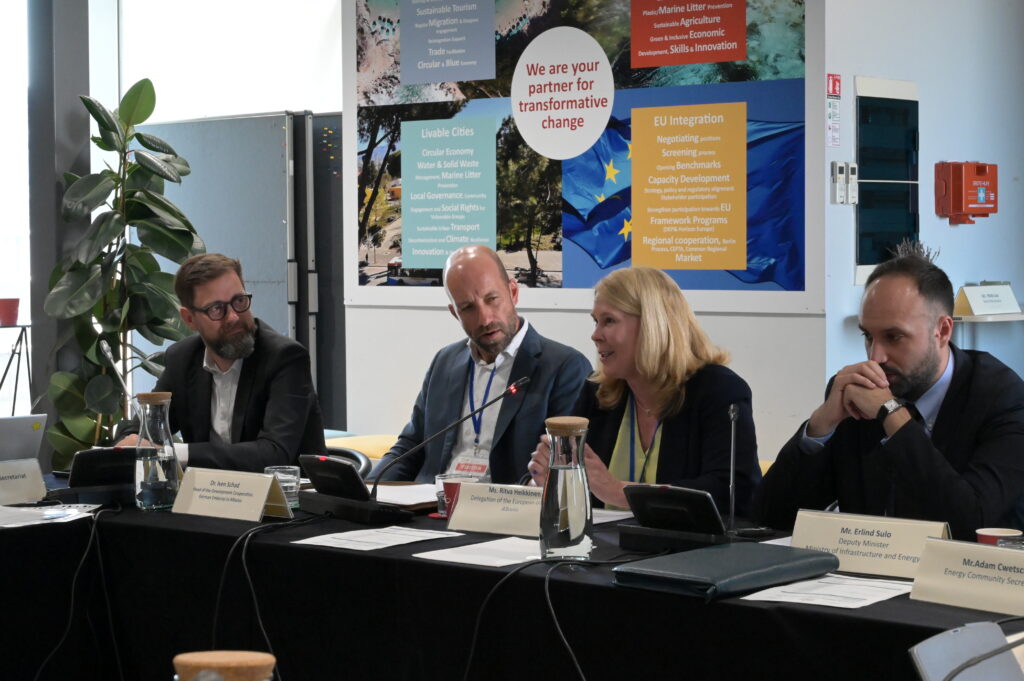
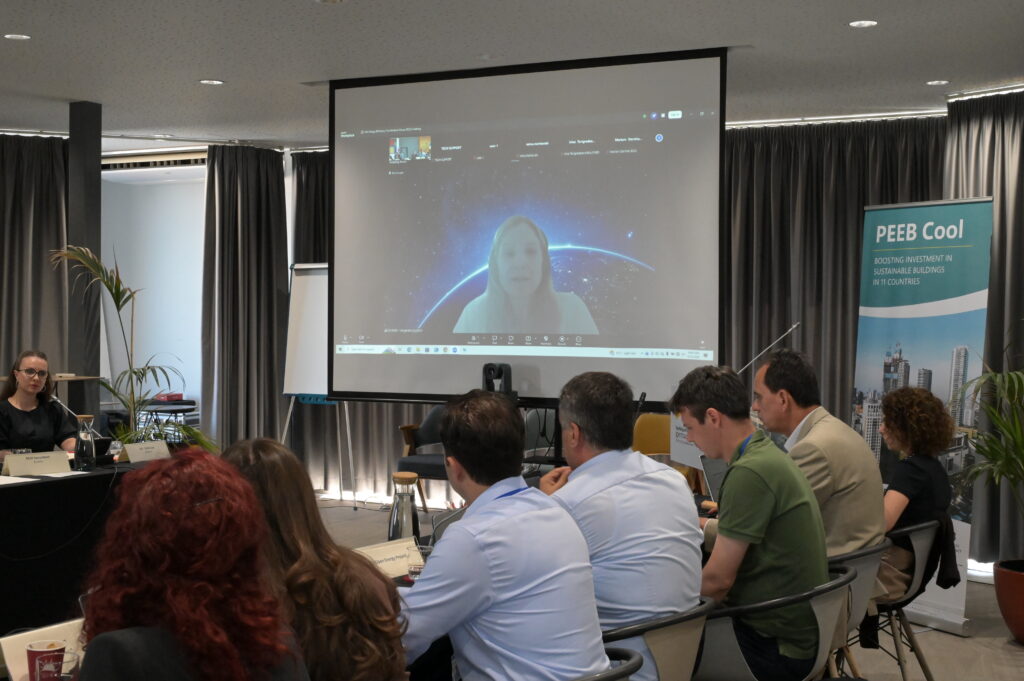
Mr. Adam Cwetsch, head of the European Green Deal Unit in the Energy Community Secretariat, reinforced the importance of the Energy Efficiency first principle as a key element in decarbonisation. He also highlighted the need for cross-sectoral collaboration across all levels of government to put the principle into practice.
Ms. Margareta Djodjevic, representing the Directorate General of Energy of the EU Commission (DG-ENER), invited parties to engage in the development of the EU post-2030 dialogues about the European energy framework, mentioning the key topics of demand activation, standardized financial products, cooling, data center labelling and electrification.
Moving from Policies to Implementation: Energy Efficiency in Buildings in Albania
The second session of the Meeting, on June 23, showcased buildings as an example of how Albania is adapting to EU rules on all levels: ensuring that new laws result in concrete benefits such as strengthening supply, reducing reliance on imported energy and advancing decarbonisation.
Bledar Aliaj, Ministry of Energy and Infrastructure of Albania, explained the four pillars of this process: EU alignment, public sector leadership as a first-mover, market delivery, and a foundation of finance and data. The new legal framework incorporates the concept of zero-emission buildings (ZEB) and prepares the sector for the post-2030 period, when ZEB will become mandatory. The public sector will be a first mover, with the goal of reducing energy consumption by 1.9% per year. Ani Haxa (Albanian Energy Agency) emphasized the country’s commitment to implementing EU laws and mentioned the large set of policy instruments under adoption.
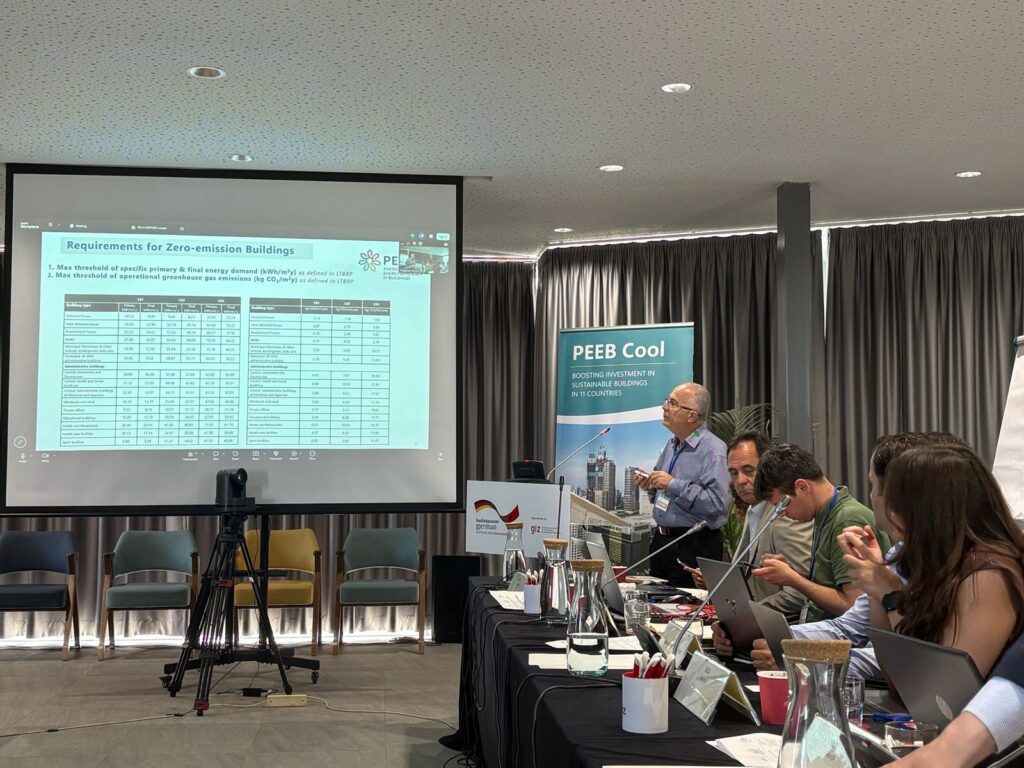
In the same session, technical expert Besim Islami shared PEEB’s experience in collaborating with the Ministry of Energy for the adoption of the country’s first unified energy efficiency building code. Energy Efficiency Building Codes are a strategic policy tools: they guide the entire design and construction process towards the goal of ensuring improved energy performance in the face of changing climatic conditions. With PEEB support, the proposal of a legal framework for the code included all relevant elements for putting the sector on the net-zero pathway: analysis of climatic conditions and unified guidelines covering key building aspects such as envelopes, HVAC, water heating, lighting and electrical systems.
Albania and North Macedonia: Unlocking Investments for Better Health in the EU Neighbourhood
Albania and North Macedonia are two PEEB Cool partner countries in the same region that share a similar challenge: an aging building stock that is unable to ensure user comfort and the perspective of growth in new construction. In hospitals, deteriorated walls and ceilings, infiltrations, excessive moisture and unstable HVAC systems create unhealthy environments that consume a lot of energy.
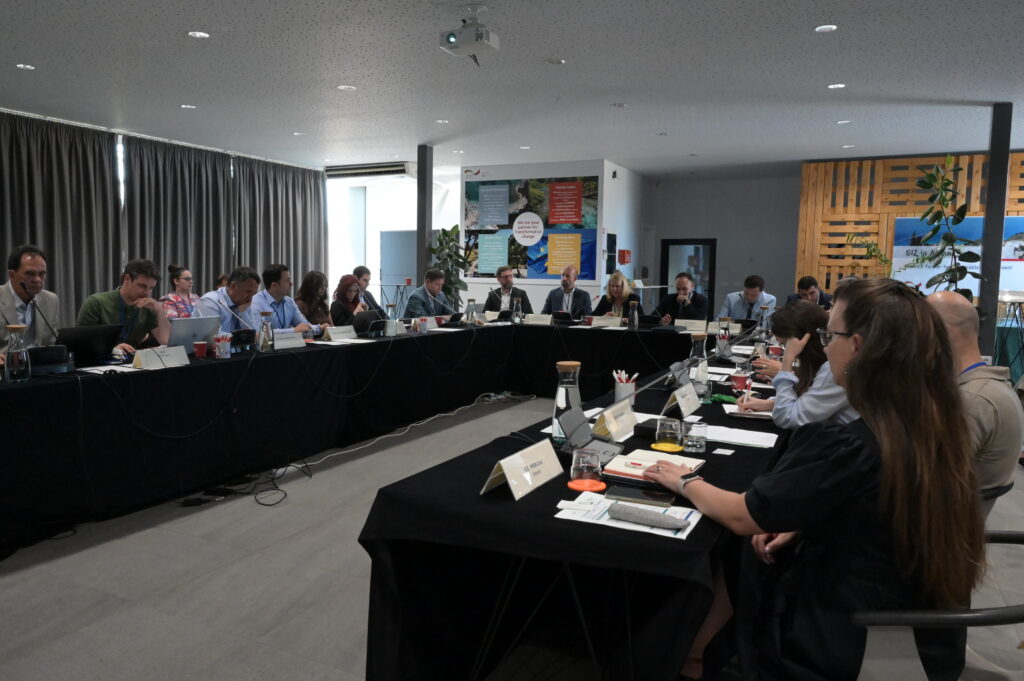
PEEB’s methodologies for preparing energy efficiency investments in buildings, which cover the full process from data collection to investment roadmaps, were instrumental in identifying hospitals as priority sectors with high returns in terms of energy savings for the public sector and improvements to citizen well-being. Thanks to them, both Albania and North Macedonia are now negotiating PEEB Cool-backed loans for large-scale hospital renovations.
In Albania, which is more advanced in this process, the government aims to invest EUR 25 million in modernizing 9 hospitals according to net-zero emissions pathway standards. The climate impact alone is a reduction of 2,634 tCO2 in annual emissions, corresponding to energy savings of 13.4 GWh per year: the equivalent to the annual electricity consumption of 350 Albanian Households or EUR 2,33 million per year in energy cost savings.
During the “Energy Efficiency in Buildings” workshop on June 24, technical expert Besim Islami explained what makes PEEB’s support to investment frameworks unique: in the process of collecting data and modelling return-on-investment scenarios, PEEB adopts a long-term view that strategically combines energy savings, maintenance costs, climate mitigation impact and adaptation needs. Beyond energy audits, it develops priority investment packages and considers financing opportunities for the creation of implementation roadmaps.
North Macedonia is working with PEEB to create conditions for data-driven energy efficiency investment not only in hospitals but also in the whole buildings sector. Through the national building inventory, PEEB and the North Macedonian Ministry of Energy are engaging with municipalities to understand occupancy and energy use in all buildings. With the inventory, the North Macedonian government will be able to design policies, investment programmes, and incentive structures that address different energy efficiency needs across buildings and construction.
Soon, PEEB will also be active in another country of the European Neighbourhood: Moldova, with the support of expertise France in cooperation with GIZ.
PEEB Cool: Investing in Efficient Buildings at the Cost of Conventional Ones
Under PEEB Cool, GIZ integrates minimum targets to access PEEB Cool Project finance its support to investment frameworks: improvements in thermal comfort, and 20 to 40% in GHG reductions or energy savings, depending on whether the project is new construction or renovation. PEEB Cool finance offers attractive conditions that bring the cost of financing efficient buildings to the same level of the costs of conventional buildings, thanks to co-funding by AFD and the Green Climate Fund. AFD also provides technical assistance to structure the projects previously identified and prioritized with GIZ support.
This integrated approach is essential to ensure that efficient projects overcome barriers to implementation. Furthermore, GIZ’s support to policies and capacity building help to ensure that the market has clear rules and prepared professionals to implement energy efficiency projects. The implementation of AFD-financed projects, in this context, helps to create practical experience among industry players and demonstrate the benefits of efficient buildings: they show that, with marginal additional costs, it is possible to achieve significant savings and improvements in user well-being.
Read more about PEEB Cool.
Sign up to our newsletter to stay up to date with PEEB activities and impacts in Albania, North Macedonia, and across the globe.