In Tunisia, as in many countries, energy efficiency in buildings has long been framed primarily as a question of installing renewable energy technology like solar photovoltaic or thermal panels. These tools matter, but they risk missing a more fundamental opportunity: the primary goal is to design buildings that simply need less energy both in their construction and day-to-day operations.
And that is exactly what bioclimatic architecture does: working with the local climate rather than against it through thoughtful building orientation, shading, natural ventilation, material selection, and passive cooling strategies. Bioclimatic buildings save energy, because they are naturally more comfortable and more resilient.
Fully tapping into the potential of bioclimatic architecture requires a mindset shift among architects and that is precisely the shift that the PEEB Cool programme is supporting in Tunisia.
Training Trainers to Multiply the Impact
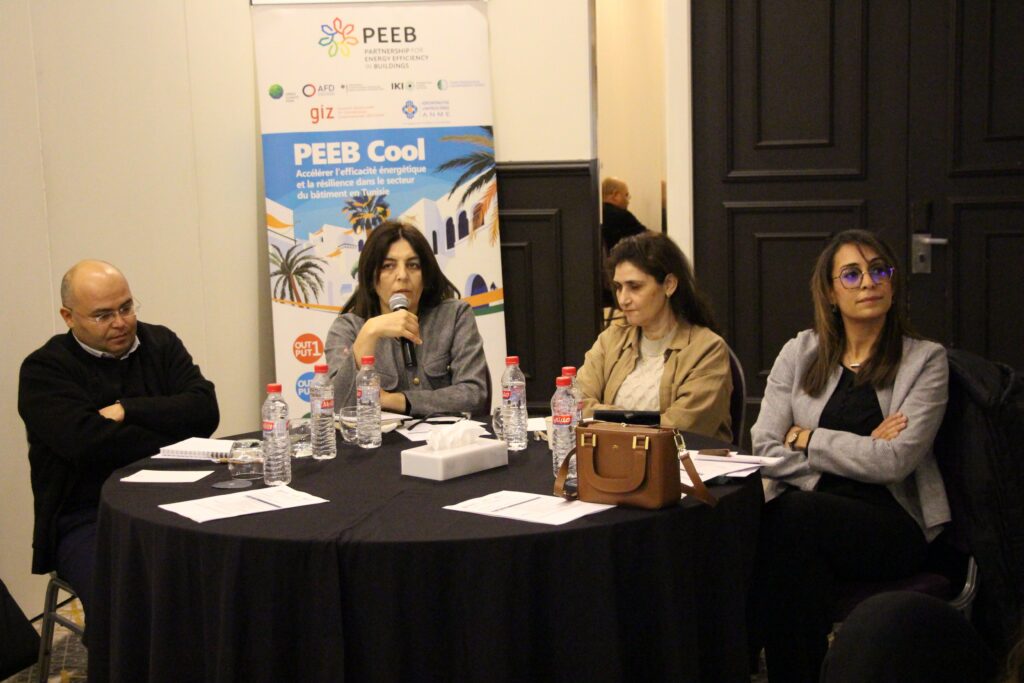
From 9 to 13 February 2026, GIZ Tunisia and ANME (Agence Nationale pour la Maîtrise de l’Énergie) organised a week-long training-of-trainers programme in bioclimatic architecture in Tunis, bringing together architects from both the public and private sectors.
The goal was not simply to equip one cohort of professionals but to build a community of practitioners capable of spreading these principles further, multiplying the reach and impact of what they learnt.
The programme covered both theory and hands-on application with interventions from national and international experts. Participants moved from the fundamentals of bioclimatic design and Tunisia’s climatic realities, through passive optimisation techniques and digital simulation tools, to international case studies and a deep dive into the energy systems that drive consumption in Tunisian buildings.
The final days brought it all together with a focus on local materials, Tunisia’s updated 2024 thermal regulations, and the financial analysis skills needed to make the business case for energy efficiency investments, closing with a structured debate on how each participant planned to take this knowledge back into their practice.
Changing What Gets Built
The building sector is one of the largest contributors to energy consumption and greenhouse gas emissions in Tunisia, a country where the built environment is growing fast. Therefore the design choices made today will impact energy demand for many decades.
PEEB Cool’s approach recognises that transforming a sector at scale requires working on multiple levels simultaneously: finance to unlock investment, policy to set the direction, and capacity building to ensure the people on the ground have the knowledge and tools to deliver.
The architects who completed this training are now equipped not only to apply bioclimatic principles in their own work, but to teach others. That multiplier effect is central to PEEB Cool’s theory of change: lasting transformation happens when knowledge moves through a sector, not just into it.
Learn More and Get in Touch
We invite you to learn more about PEEB Cool’s work transforming the building sector across 11 countries on 4 continents: visit peeb.build/peebcool.
To learn more about the specific work PEEB and Tunisia are doing or to connect with the team, reach out to the PEEB country experts Akram Hamza and Houssem Rahmani at GIZ Tunisia: info@peeb.build