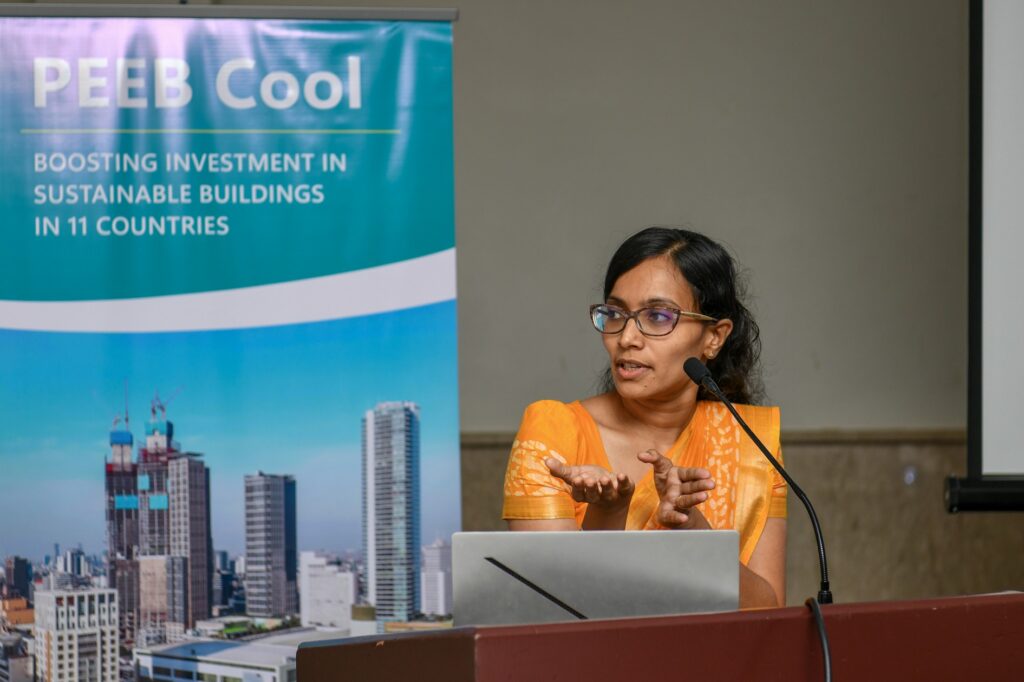
From lower operational costs to enhanced sustainability credentials in global value chains, energy benchmarking can play a critical role in making Sri Lanka’s textile and apparel industry more competitive. The Partnership for Energy Efficiency in Buildings (PEEB), implemented by GIZ Sri Lanka together with the Ministry of Energy and the Sri Lanka Sustainable Energy Authority (SLSEA), is supporting Sri Lanka’s efforts to introduce energy benchmarking in key industrial sectors. On 27 January 2026, PEEB and SLSEA brought together textile and apparel factory operators, regulators, and technical experts in Colombo to co‑design an energy benchmarking framework that reflects real operating conditions in the sector.
Background
As a major export sector, textile and apparel is central to economic growth, employment, and foreign exchange earnings. Rising energy prices, global competition, and pressure for low‑carbon, ethically produced garments are pushing manufacturers to improve efficiency and sustainability.
Robust Energy Performance Indicators and sector-specific benchmarks can guide producers to a more efficient use of energy, and this is why SLSEA is extending mandatory energy benchmarking to the textile and apparel sector under the Benchmarking Regulation.
Thanks to the stakeholder workshop, textile sector actors can help shape the upcoming regulation and ensure that performance indicators address the variety of energy efficiency needs in the garment supply chain. Sri Lanka’s textile and apparel sector comprises a diverse range of factory types, including cutting, sewing, knitting, and dyeing facilities, each with distinct energy consumption characteristics. Energy use is primarily driven by sewing and knitting machinery, lighting, HVAC systems, boilers for steam generation, dyeing processes, and compressed air systems, which together represent a significant share of production costs.
In the workshop discussions, stakeholders could discuss sector consumption characteristics and key efficiency opportunities, identify priorities, and provide feedback on the essential steps for the development and adoption of the new benchmarking regulations: from benchmarking methodology study and methodological approach to the foundations of the proposed regulation.
Efficient Data Collection for an Energy-Efficient Sector: Insights from Participants
The quality of data collection, as well as the robustness of technical studies, are essential to enable the effectiveness of the upcoming regulations. Participants highlighted the opportunity to reduce the burdens of additional reporting by taking advantage of existing data, currently collected by many manufacturers for international sustainability and compliance reporting. Current investments already made in many facilities shall also be considered in needs assessments for energy efficiency improvements.
Looking forward, energy intensive systems were identified as priorities: compressed air, HVAC for thermal comfort and humidity control, and steam generation. As important enablers for full benchmarking implementation in the future, participants mentioned enhancements in infrastructure and strengthening in-house technical capabilities related to energy monitoring, analysis, and reporting, especially among facilities with limited exposure to international benchmarking and reporting requirements. Support schemes and capacity building were cited as strategic leverages for regulatory effectiveness.

Way Forward: Better Data for a More Efficient Sector
The workshop confirmed the importance of establishing national energy benchmarks for the textile and apparel sector to support data‑driven energy management and reinforce Sri Lanka’s position as a hub for sustainably manufactured garments.
Close collaboration with manufacturers and industry bodies such as the Joint Apparel Association Forum (JAAF) Sri Lanka will be essential to collect high‑quality data and refine the benchmarking framework.
Building on existing data portals and reporting platforms already used for international sustainability and compliance reporting can help minimize duplication, improve data reliability, and align with global requirements. Many participants expressed strong interest in engaging with SLSEA’s National Energy Benchmarking initiative, reflecting the sector’s commitment to energy efficiency, sustainability, and long‑term resilience.