COP30 closed with renewed political ambition for the buildings sector. During the first first ministerial meeting of the Intergovernmental Council for Buildings and Construction, high-level representatives committed to implementing pledges for building sustainability.
Finance was high on the agenda as a key pillar for implementation. PEEB showcased its work in transforming finance for the buildings of the future in a series of events, which is firmly anchored in two initiatives: a Handbook about the use of Article 6 of the Paris Agreement PEEB’s capacity building service package for development banks.
Through the presence of its Co-head of Secretariat Joscha Rosenbusch, the Partnership also made the Conference an opportunity to expand the reach of its work on finance. Under the COP30 Presidency “Plan to Accelerate Solutions”, PEEB submitted a proposal for a broader capacity development and knowledge exchange initiative for the development banks – the institutions closer to where buildings are planned, financed, and constructed.
Find out all about how PEEB’s leadership in re-shaping finance for buildings at COP30 below!
Implementing high-level agendas: PEEB at the first ICBC ministerial meeting
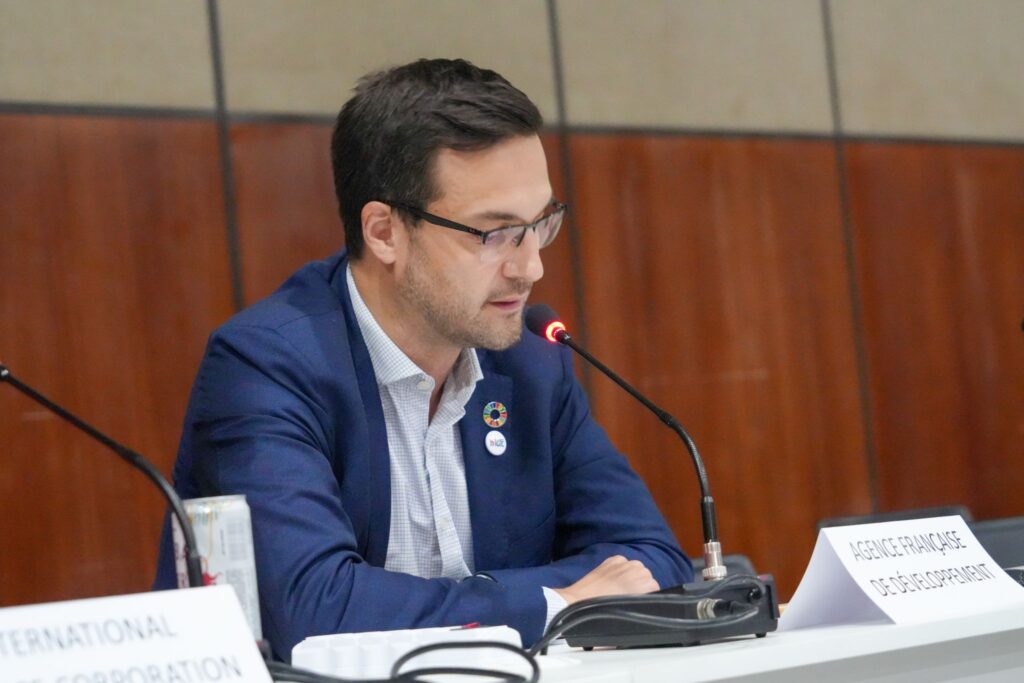
PEEB is working to re-shape finance for better buildings in partnership with key players such as the Finance in Common Summit and the Global Alliance for Buildings and Construction, highlighted Nicolas Picchiotino (Secretary General of the International Development Finance Club and Head of Public Development Banks Mobilisation at the French Development Agency) at the first ICBC ministerial meeting.
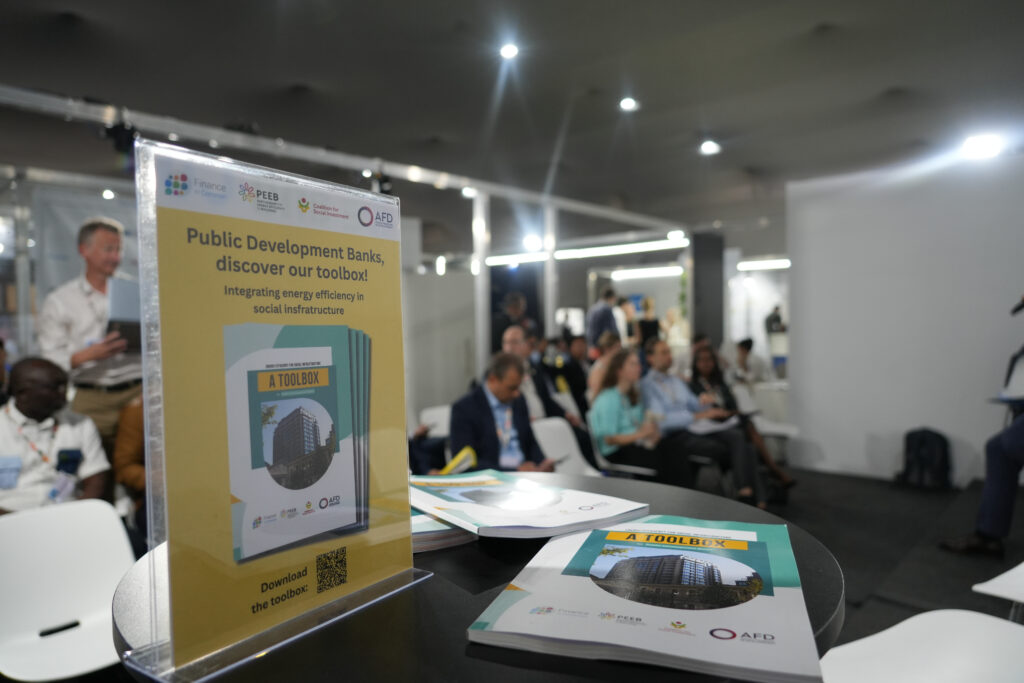
PEEB’s work to transform finance was recognised by ICBC member countries, who acknowledged latest PEEB publications and initiatives: PEEB’s Handbook for the Development of Article 6 Projects in Buildings (acknowledged by Armenia, Bangladesh, Brazil, France, Germany, Italy, Kenya, Luxembourg, New Zealand, Somalia) and the PEEB service package for development banks and financial institutions, consisting of the Toolbox for Public Development Banks on Energy Efficiency in Buildings and Social Infrastructure and a training on green building for development banks (acknowledged by Brazil, France, Germany, Kenya, Luxembourg, New Zealand, Türkiye).
Innovative finance: unlocking a large-scale buildings transformation
Recent finance innovations – from the mechanisms of the Art. 6 of the Paris Agreement to sustainable finance taxonomies and new financial instruments – can bring the buildings transformation to scale. The PEEB-organised session “Innovating Climate Finance for Buildings: How Development Banks and Carbon Markets can Close the Gap” explored how different actors can tap on these opportunities with two panel sessions on November 13 at the Buildings and Cooling Pavilion.
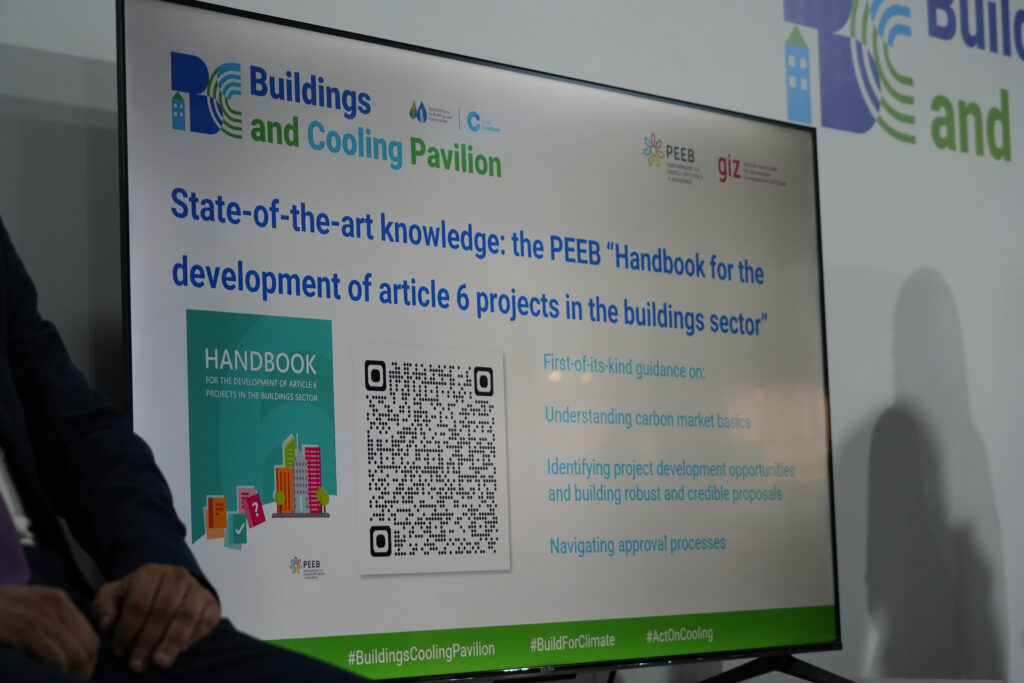
Holger Treidel (Head of Climate, GIZ) presented the launch of PEEB’s Handbook for the development of Article 6 Projects in the Buildings Sector.

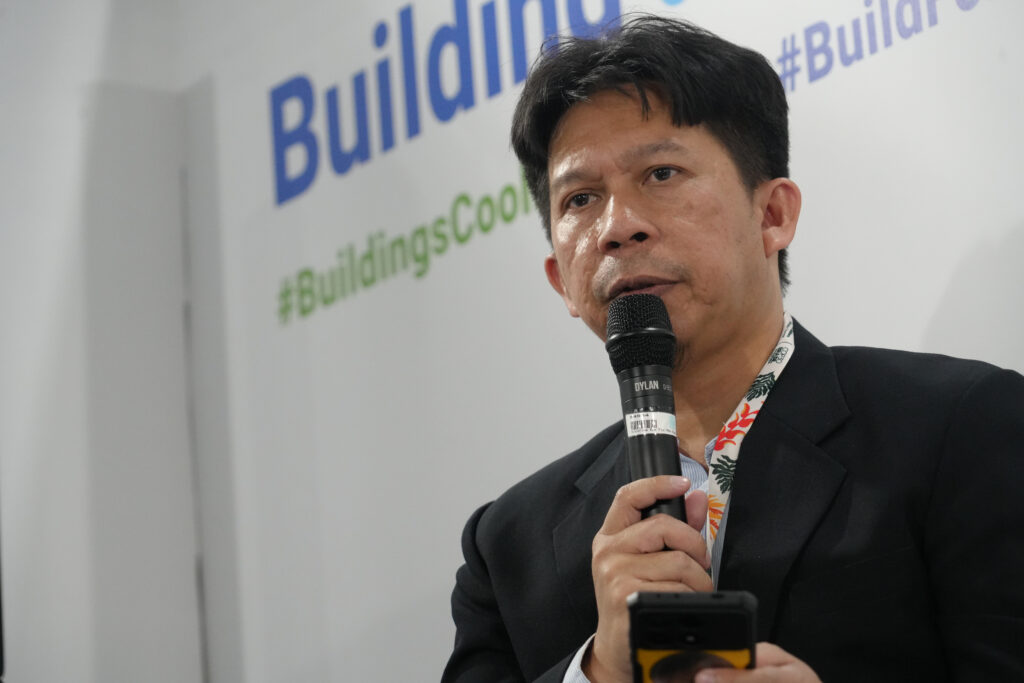
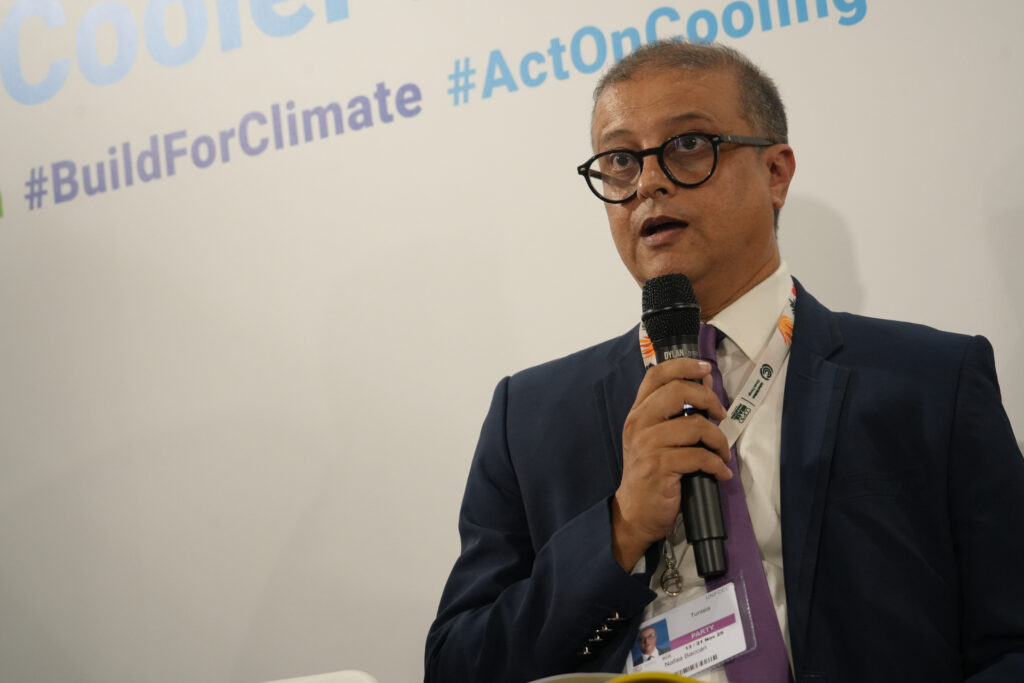
PEEB partners from Indonesia, Nigeria, and Tunisia shared their perspectives on the enabling conditions and benefits of using Paris Agreement Art. 6 mechanisms to channel finance for buildings. A few highlights:
- Building capacity to enhance Indonesia’s conditions for investment: Muhammad Arifuddin, Coordinator of the Energy Conservation Programme of the Ministry of Energy and Mineral Resources Indonesia, explained how PEEB’s capacity building activities are helping Indonesia to expand carbon markets to buildings
- A mechanism for safer investments in Nigeria: Nana Maidugu, head of Sustainability and ESG at the Nigeria Sovereign Investment Authority (, highlighted that efficiency standards protect the large real estate portfolio from climate-related risks
- Data for better investment in Tunisia: Nafaa Baccari, Director General of the Tunisian National Agency for Energy Conservation (ANME), shared how comprehensive buildings data has helped to Tunisia to access more finance for energy efficiency in the country
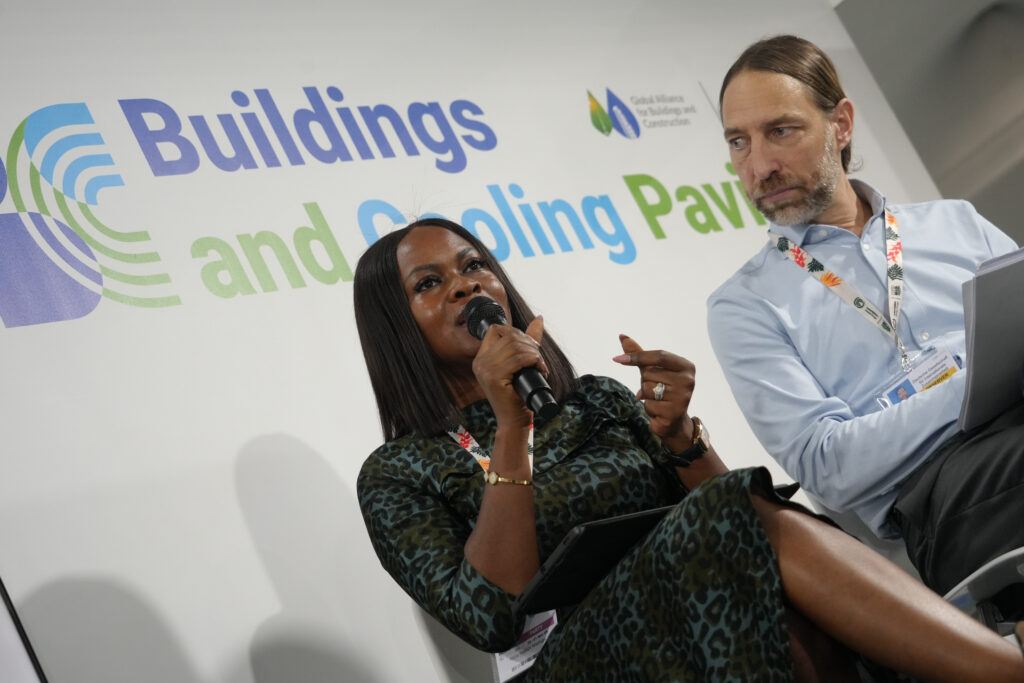
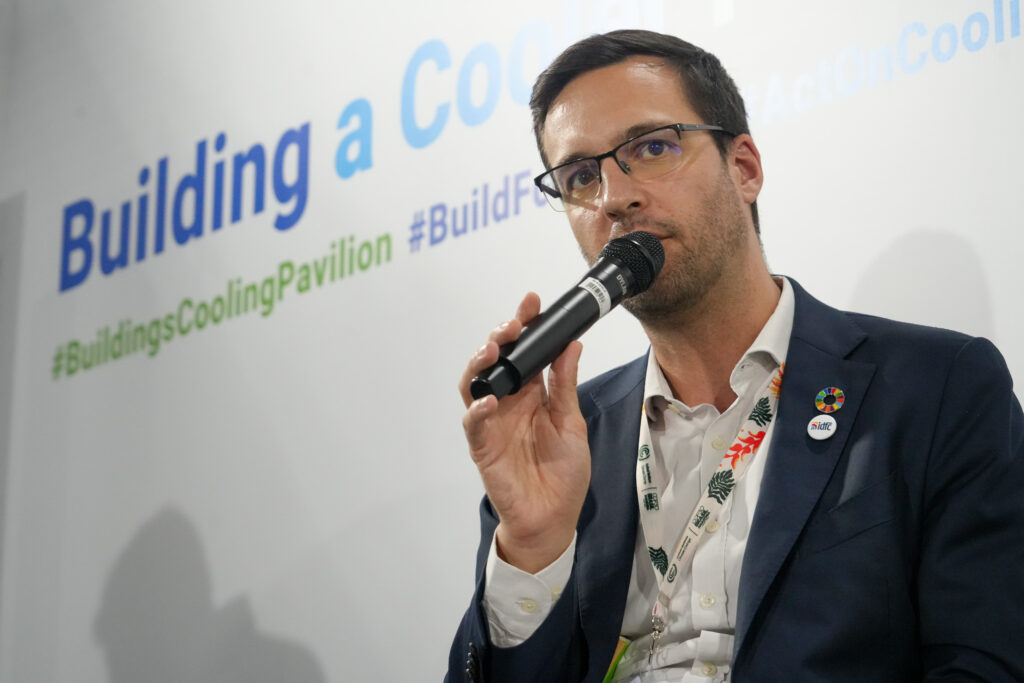
The role of development banks and finance institutions was the topic of the second panel:
- Nicolas Picchiotino (AFD) presented PEEB’s Toolkit and capacity building initiative for development banks
- Katja Eisbrenner (Director, Communities, Energy & Infrastructure, Guidehouse) discussed the potential of pilot projects to bring a large-scale transformation
- María Victoria Flores, Minister of Environment and Circular Economy of the Province of Cordoba in Argentina showed how subnational governments can start a bottom-up transformation
- Sébastien Soleille, Director Sustainable Finance at the French Banking Federation, reflected on the complementary role of public and private finance
- Dr. Nqobizitha Mathanda Dube, Head of Climate Finance and Sustainability of the Infrastructure Development Bank of Zimbabwe, discussed challenges and solutions in the context of emerging economies
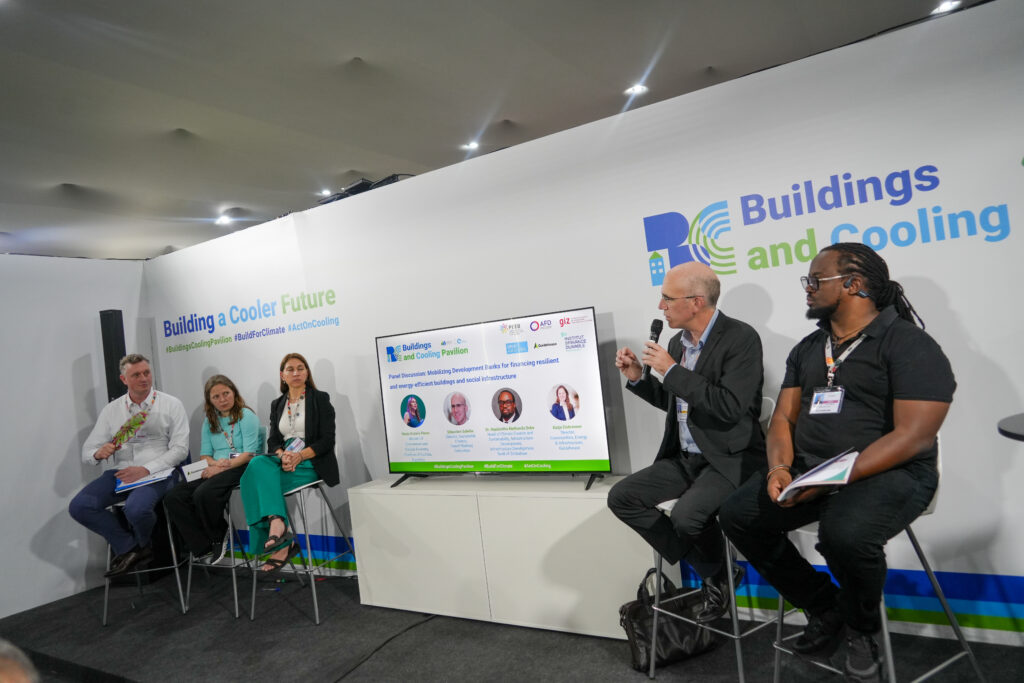
Watch the first panel at the Buildings and Cooling Pavilion Youtube Channel.
Adaptating to extreme heat: a buildings issue
Buildings – the spaces where humans spend the majority of their time – are in the forefront of adapting to increasing temperatures. In the face of surging energy demand for cooling, efficient buildings that require reduced use of air-conditioning are also key to ensure energy affordability.
Joscha Rosenbusch, PEEB-co-head of Secretariat, talked about the urgency of financing cool buildings at the event “Unlocking Energy Efficiency with Sustainable Cooling and Heating for Buildings”, on November 12 at the Buildings and Cooling Pavilion. Watch now!
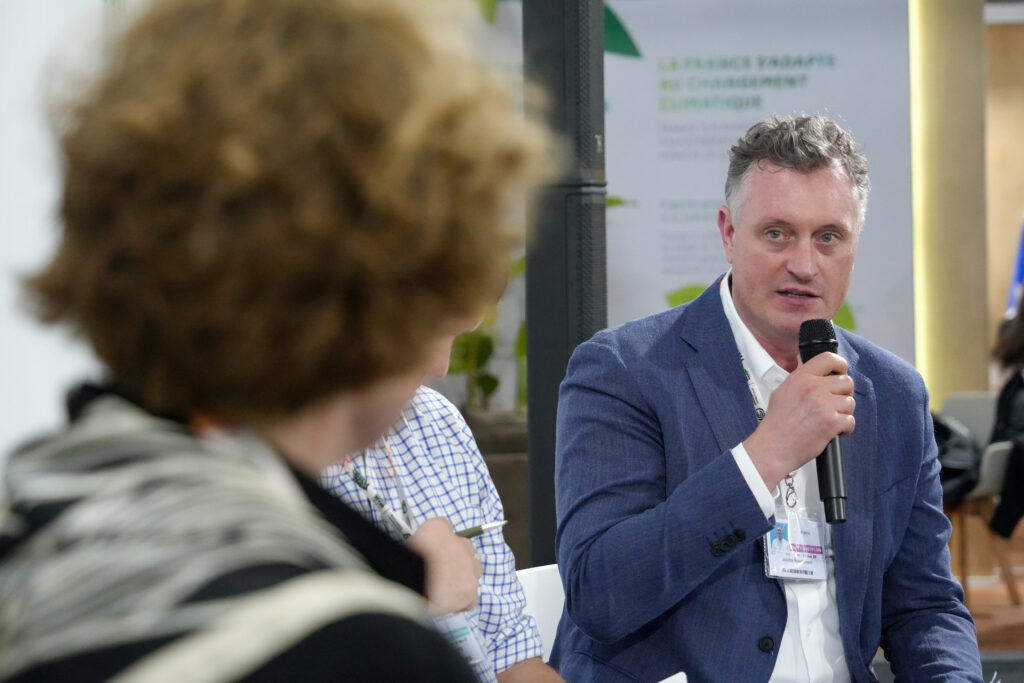
Turning pledges into impact: PEEB and the Chaillot Déclaration
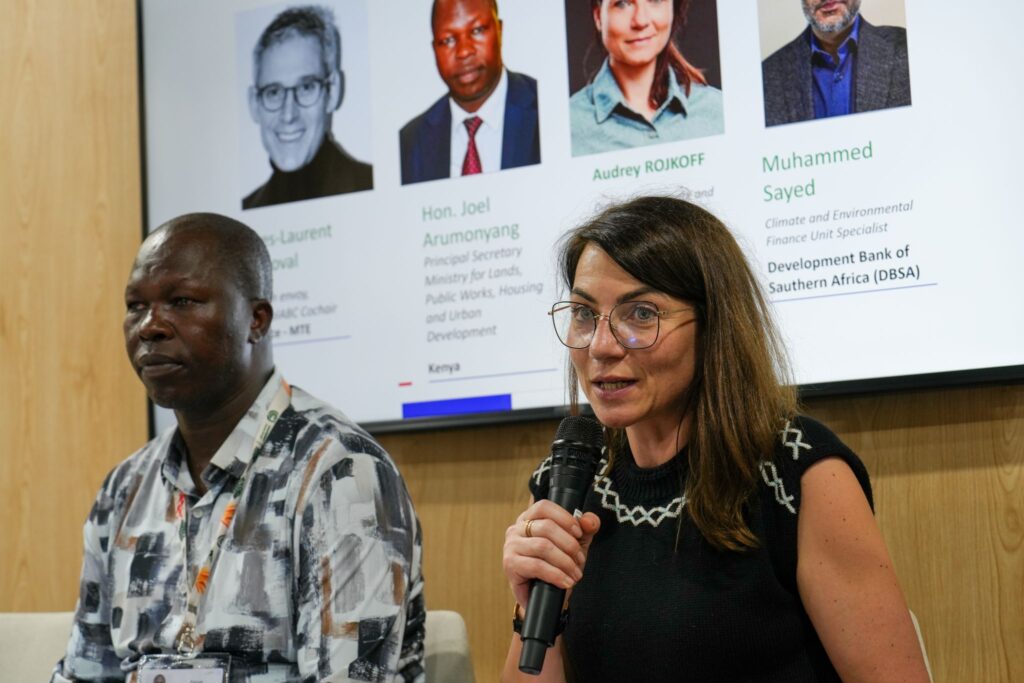
The Chaillot Déclaration, signed by 70 countries at the Buildings and Climate Global Forum in 2024, was a landmark in high-level commitment to building decarbonisation. Audrey Rojkoff, Climate Director at AFD, explained how PEEB’s support to integration of energy efficiency into building programmes contributes to the declaration goals at the event “Implementing the Chaillot Declaration: financing buildings and social infrastructure for decarbonization and adaptation”, in the French Pavilion.
Transforming finance together: PEEB contributes to the Finance in Common’s Coalition to Support the Global Energy Transition
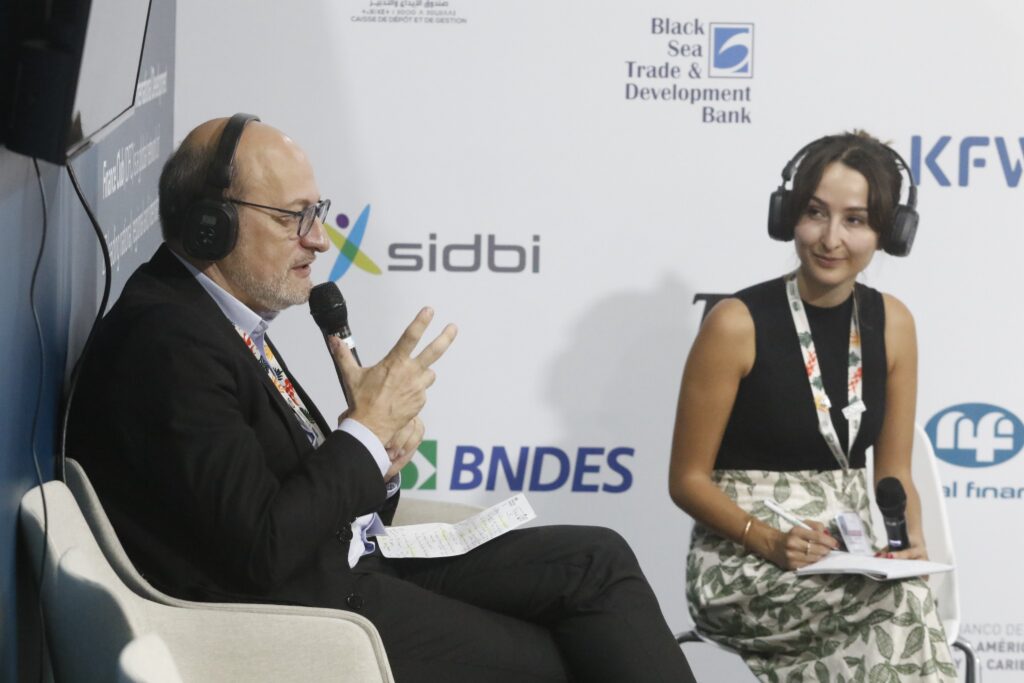
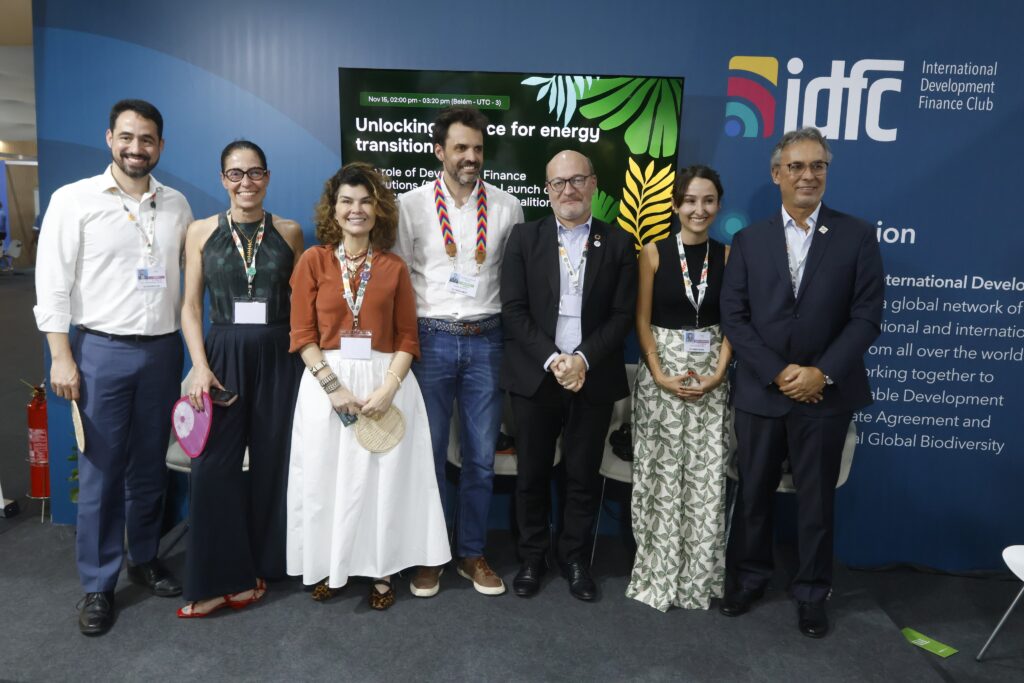
On November 15 at the BNDES Pavilion, the Finance in Common (FiCS) initiative, the Development Bank of Latin America and the Caribbean (CAF), the Brazilian Development Bank (BNDES) and Instituto Clima e Sociedade (iCS) launched a coalition to support the global energy transition. This coalition will gather public development banks to collaborate and empower each other to support a global energy transition, building on the PEEB Toolkit for development banks.
Acting to mobilise finance: implementing PEEB and enlarging capacity development for development banks
In the coming months, PEEB will continue working to make energy efficient buildings the norm. Implementation of Article 6 and Development Bank activities will strengthen results on the ground. In parallel, PEEB will continue to develop its capacity building initiative under the COP30 plan to accelerate solutions.
The Partnership will continue to harness the strength of the Franco-German cooperation that launched it at COP21 in Marrakech, and to deepen collaboration with key players such as the Global Alliance for Buildings and Construction, the International Development Finance Club, and the Finance in Common (FiCS) Summit.
Photo Credits: Mariana Castano Cano/10 Billion Solutions