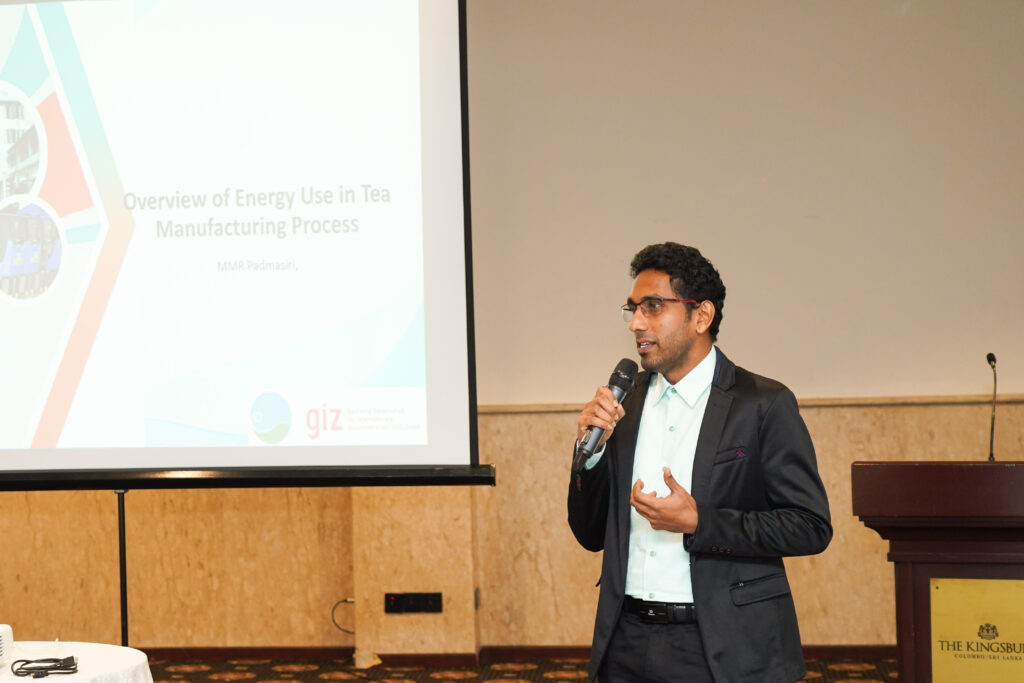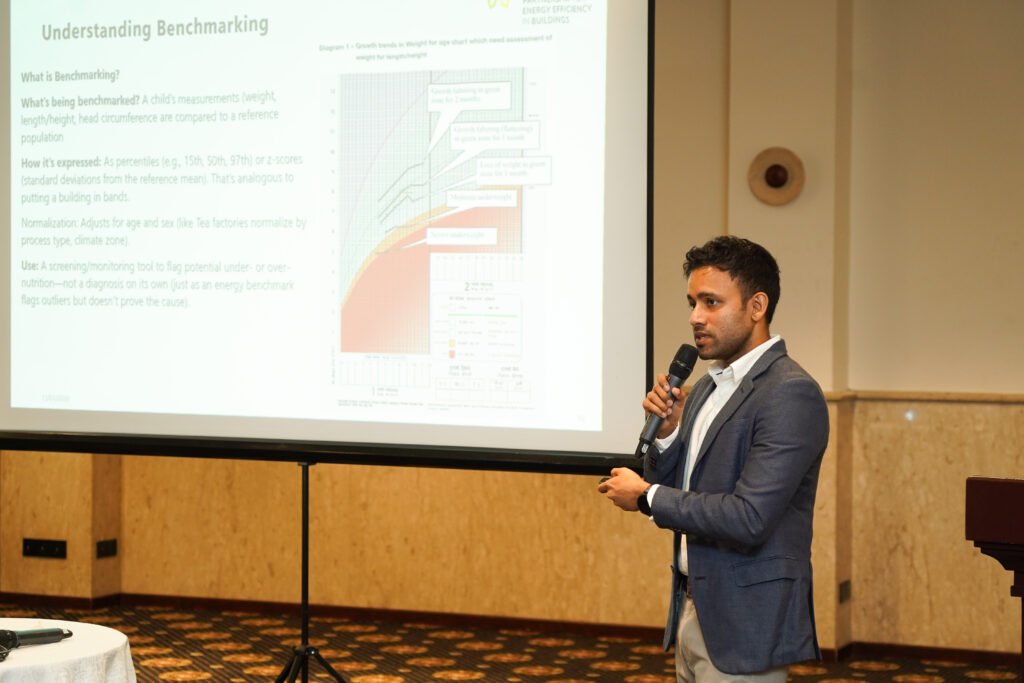
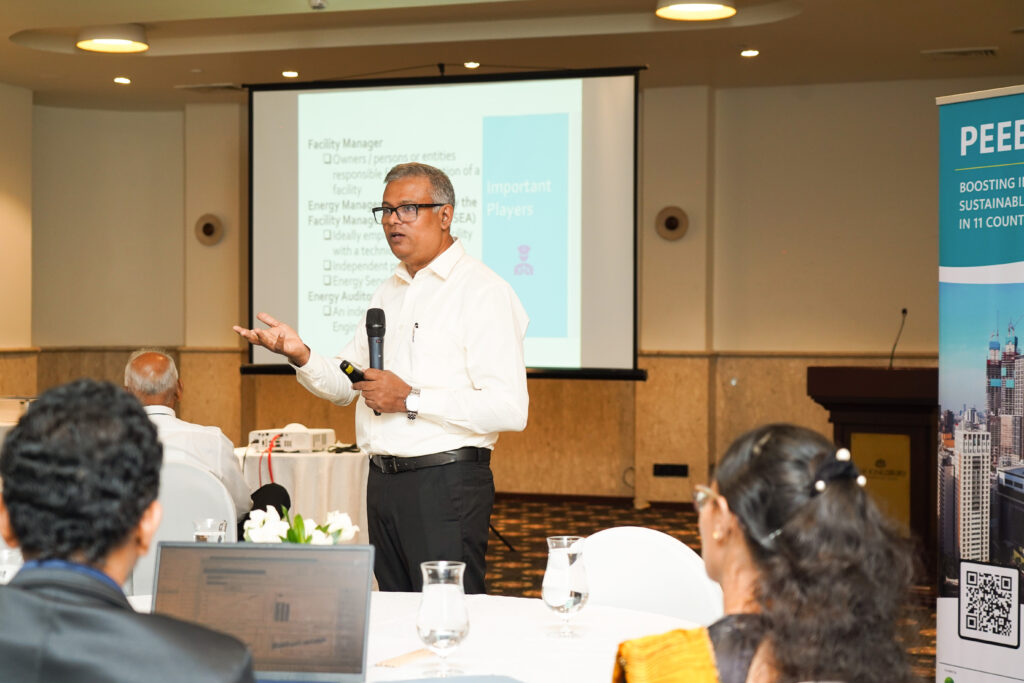
Energy efficiency has the potential to make Sri Lanka’s tea industry more competitive, by delivering a higher quality product with better sustainability credentials and lower operational costs. On January 14, 2025, tea factory operators, regulators, and technical experts gathered to ensure that the proposal for Energy Benchmarking regulations helps the sector to achieve this goal. In a workshop promoted by PEEB in cooperation with the Ministry of Energy and the Sri Lanka Sustainable Energy Authority (SLSEA), they discussed how to ensure that the benchmarking regulations reflect the operational realities in the industry.

Background
Sri Lanka’s tea sector encompasses a wide range of operations, from up country, mid country to low country tea factories, each with distinct energy consumption patterns. Energy demand is primarily driven by key processing stages such as withering, rolling, drying, and packaging, which together account for a substantial share of production costs.
As one of the country’s most significant export industries, the tea sector plays a vital role in GDP contribution, employment generation, and foreign exchange earnings. With increasing global competition and growing emphasis on sustainable production, improving energy efficiency offers a dual benefit: reducing operational costs while strengthening sustainability credentials valued by international buyers and markets.
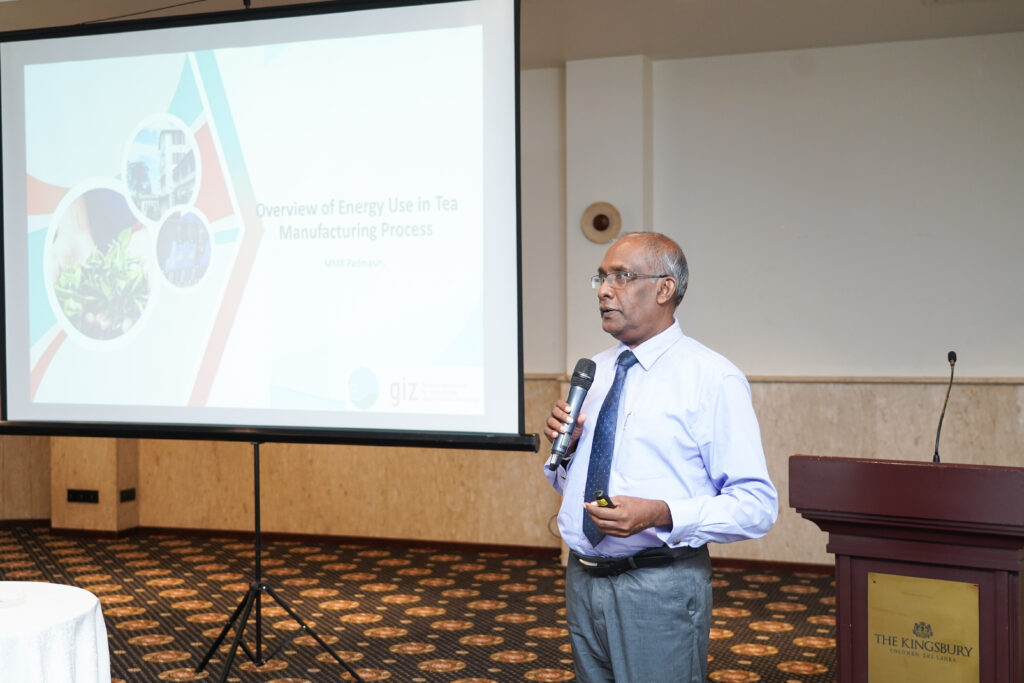
Recognizing this, SLSEA has initiated steps to extend mandatory energy benchmarking to the tea sector under the Benchmarking Regulation, with the objective of developing scientifically robust Energy Performance Indicators and sector specific benchmarks.
Innovation to Produce More, and Better Tea
During the exchange, participants highlighted the need for regulations that consider the significant variation of factory characteristics and consequently energy consumption in the sector. They also identified priority stages for efficiency improvements throughout production and highlighted the importance of innovation and capacity development: emerging technologies, enabled by pilot projects, and a skilled workforce of energy managers are essential for benchmarking compliance.
More than efficiency, those industry changes can deliver quality: the adoption of certain energy-efficient technologies has demonstrated positive impacts on tea quality, when properly implemented and managed.


Way Forward: a Commitment to Improve Efficiency through Better Data
The workshop reaffirmed the importance of establishing national energy benchmarks for the tea sector to support data driven energy management, improve competitiveness, and reinforce Sri Lanka’s position as a producer of sustainably manufactured tea.
Moving forward, close collaboration with tea factories will be essential to enable comprehensive data collection, refine the proposed benchmarking framework, and develop representative benchmarks for different sub sectors across the industry. Encouragingly, many participants expressed readiness to engage with the SLSEA’s National Energy Benchmarking initiative, demonstrating the sector’s commitment to efficiency, sustainability, and long-term resilience.